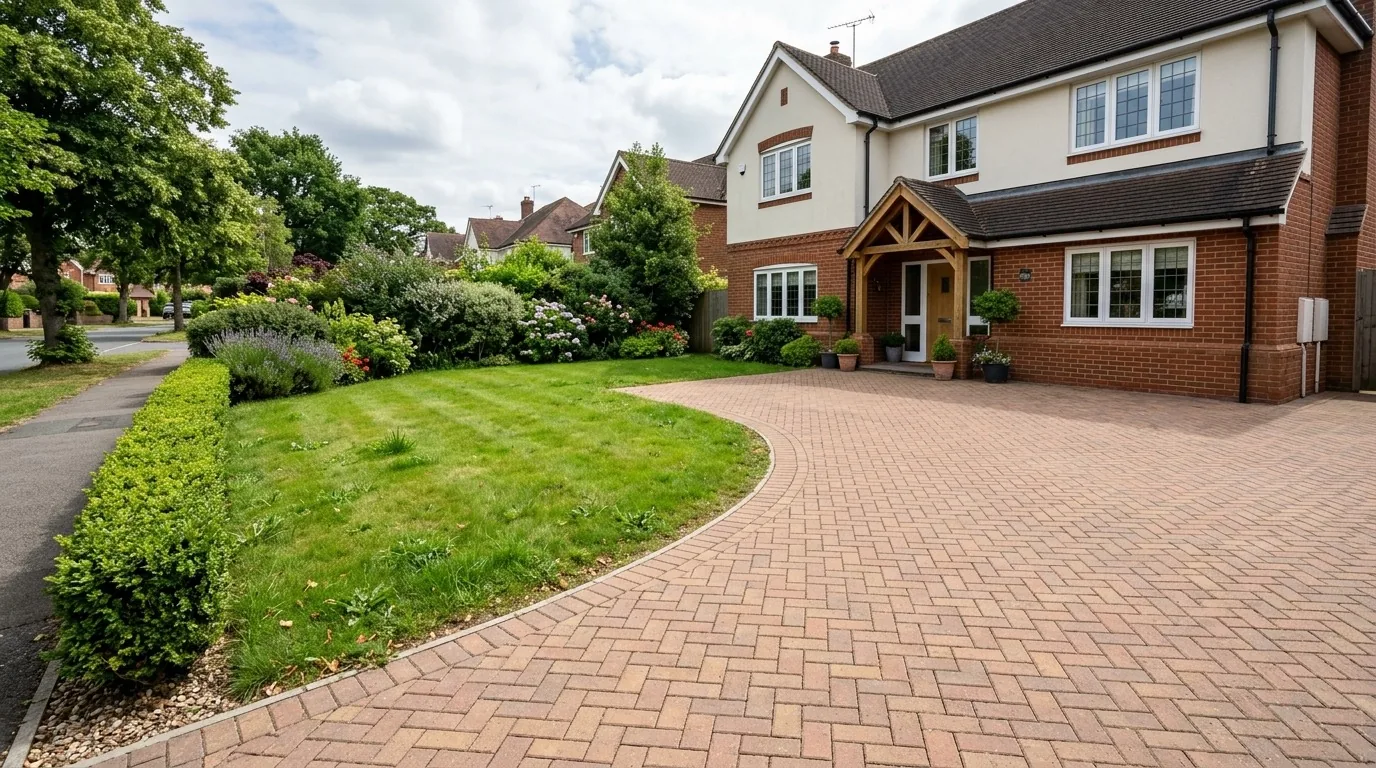
Honestly? For a light green film, you can make a fair job of cleaning a driveway yourself if you take your time and keep the pressure sensible. But for a drive that's properly mossed up, or block paving with the dirt down in the joints, a hired domestic washer usually does more harm than good - and you're back to green within a few weeks. Here's how to tell which one you're dealing with, and when it's worth getting a professional in.
When doing it yourself is fine
If your paving has just lost a bit of its colour or picked up a light green film, and it's a small, flat area, a careful DIY clean can freshen it up nicely. Keep the nozzle moving, hold it back from the surface, and work in even passes rather than sitting in one spot. On plain concrete you've got a bit more margin for error than on block paving or natural stone.
Where it goes wrong
The trouble starts when the growth is established or the paving is delicate. Three things catch people out:
- Damage. Too much pressure held too close strips the surface off block paving, scars natural stone and blasts the jointing sand out from between the blocks - so they work loose and, ironically, the weeds come back worse. Putting that right costs far more than the clean ever would.
- It doesn't last. A domestic washer rinses the tops of the blocks but leaves the moss and weed roots down in the joints, where it regrows fast. Within a few weeks it can look like you never touched it.
- The graft. It's a full weekend on your knees, soaked through, dragging a lance around and shifting cars - and it sprays dirt up your walls, windows and next door's car.
The kit is the real difference
A £100 hire washer is underpowered, and used freehand it leaves that streaky, zebra-striped finish where you can see every pass you made. A professional setup is a different animal: thousands of pounds of Honda-powered kit that cleans evenly, edge to edge, at a pressure matched to the surface. Nineteen years of doing this means knowing exactly how hard you can push each type of paving before it marks - and that's the bit you can't hire.
What it actually costs
Hiring a washer is £30-£50 for the day, but add your whole weekend, the risk of damaging the drive, and a result that greens up again by next month, and it's a false economy for anything more than a light freshen-up. A professional driveway clean is usually £180-£300, done in a few hours, with a fixed price agreed up front - and you only pay once you're happy with it.
So, DIY or a pro?
A light film on a small concrete area? Have a go. Established moss, block paving, natural stone, or a big drive you want to come up properly and stay that way? That's where a professional clean pays for itself. Send a photo of yours on WhatsApp and Mark will tell you straight which camp you're in, and give you a fixed price the same day either way.
Want a fixed price for yours?
Send a photo of your driveway or patio and your postcode on WhatsApp, and Mark will send you a fixed price the same day.
Common questions
Will a domestic pressure washer damage my block paving?
It can, if it's held too close or run at too high a pressure - it strips the surface and blows the sand out of the joints. We match the pressure to the blocks so they're cleaned thoroughly without being damaged.
Why does my driveway go green again so quickly after I clean it?
Because a surface rinse leaves the moss and weed roots down in the joints. We work the growth out of the joints as well as off the surface, so it stays clean far longer.
Is it cheaper to clean a driveway myself?
For a light film, yes. For an established clean it's often a false economy once you count your time, the hire cost and the risk of damaging the drive. A professional clean is a fixed price, done in a few hours, and you only pay when you're happy.